How to Create a Miniature Botanical Garden Indoors
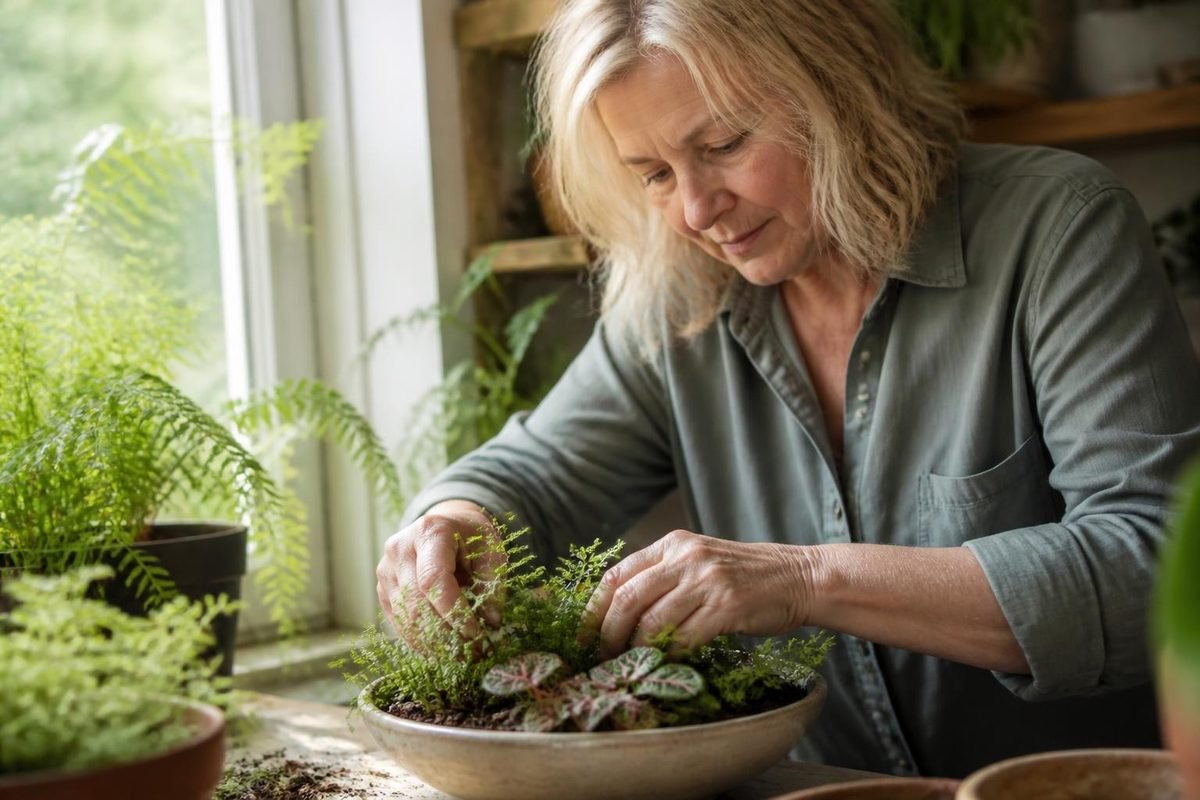
To create a miniature botanical garden indoors, arrange a few small plants with similar light and watering needs in a suitable container. Give them room to grow, place the garden in appropriate light, and check the soil before watering.
Choose a container and a place
Start with a shallow planter that has drainage holes and a saucer underneath. A container about the size of a dinner plate gives you room to arrange several small plants without making the garden hard to move. The holes let excess water escape, which helps prevent waterlogged soil.
Look for a bright spot near a window. Many small foliage plants prefer bright, indirect light rather than strong sun through glass. Watch the light over the course of a day before choosing the spot, and leave enough space to reach the plants for watering and trimming.
A glass terrarium is another option for plants that enjoy humidity. It needs a different approach to watering because excess water cannot drain away. An open planter is often easier to manage when you are starting out.
Pick plants that belong together
Choose two or three kinds of small plants that like similar conditions. For a humid terrarium, miniature ferns and fittonia can work together. For a brighter, drier garden, small succulents are a better match for one another. Keep succulents out of a closed terrarium, where moisture can linger around their leaves.
Check each plant's care label for its light needs and mature size. A plant that looks tiny at the garden centre may eventually crowd its neighbours. Leave gaps between plants so air can move around the leaves and roots have space to spread.
You can add a small stone or a piece of clean bark for a sense of scale. Keep decorations clear of stems, and avoid covering all the soil so you can still check its moisture.
Plant and care for the garden
Use potting mix suited to your plants. A moisture retaining mix suits many tropical foliage plants, while succulents need a free draining mix. Add soil to the container, loosen each root ball gently, and set the plants at roughly the same depth they were in their original pots. Fill around the roots without packing the soil tightly.
Water gently after planting and let excess water drain into the saucer. Empty the saucer rather than leaving the planter standing in water. After that, check the soil with a finger before watering again. Foliage plants generally need water sooner than succulents, but the surface should not stay constantly soggy.
Remove dead leaves and trim growth that crowds its neighbours. Turn the planter occasionally if plants begin leaning toward the window. If one plant repeatedly struggles, check its care needs and consider moving it to its own pot.
Questions about miniature indoor gardens
Can I use a jar without drainage holes?
Yes, but water very sparingly. Excess water has nowhere to go, so it is easy to saturate the soil.
Do I need special lights?
Not always. If natural light is insufficient for your chosen plants, a grow light can supplement it.
Can I mix moss with succulents?
It is better to keep them separate. Moss generally needs more consistent moisture than most succulents.
For more detail, see set flowers guide